What brought you this far may not be enough for what comes next.

You have probably become good at what you do.

But the world around your work is changing fast.

AI and automation are changing what organisations can promise, what customers expect, and what people like you are being asked to do.

The next step may need more than greater expertise or harder work.

It may ask you to see the game differently.

I tend to work with experienced professionals and leaders who have done well, but find that their next move asks for something different.

Does any of this feel familiar?

You do not need to have the answer before you begin.

Sometimes the game has changed

You learn what works.

You become good at it.

Then the role gets bigger, the stakes change, and some of the old moves stop working.

That does not always mean something has gone wrong.

Sometimes the next level simply asks something different of you.

What does this level ask of you that the last one did not?

How I look at these moments

I’m Ron.

When someone brings me a difficult role, decision or transition, I try to understand two things together:

What is happening around you?

and

What is happening in you as you respond to it?

Sometimes the issue is the system.

Sometimes it is an old response that has outlived its usefulness.

Usually the two are connected.

My work is often about helping you see yourself and your situation in a way you could not quite see before.

That can open up choices that were not visible earlier.

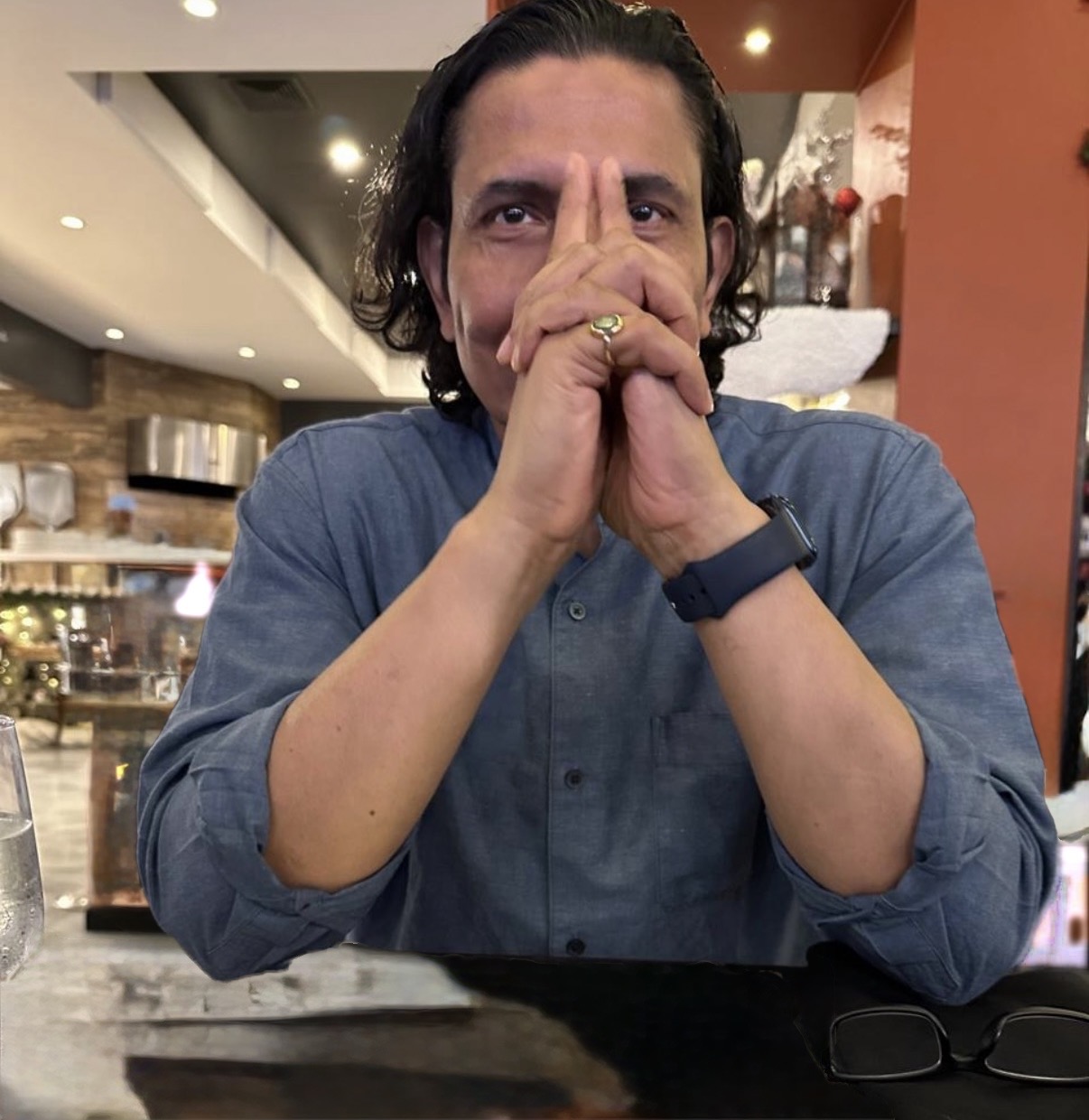
Ron Mukherjee seated at a table, hands resting together, listening

Sometimes the problem is not the problem

A client was describing a part of his organisation that was not working.

“So much needs to be done,” he said. “But nobody really owns the whole thing.”

“What should happen?” I asked.

He knew.

Within a few minutes he had explained the gaps, the people involved and what needed to change.

“So why isn’t it happening?”

He paused.

“Because nobody has really asked me to do it.”

I laughed.

He laughed too.

“Who would need to ask you?”

“My boss.”

“And if he doesn’t?”

A longer pause.

“That is probably the problem, isn’t it?”

It was.

He did not need more knowledge.

He was waiting for permission.

The shift was simple:

I can see what should happen.

became

I can help make it happen.

That is not a small shift.
What can begin to change?

The movement is different for everyone.

But I often see shifts like these:

Waiting → Shaping

Expertise → Perspective

Doing it yourself → Building through others

Approval → Your own point of view

Solving the problem → Asking if it is the right problem

Doing the role well → Growing beyond the role

They usually begin when something becomes visible that was not visible before.

What is it like to work with me?

I am trained as a coach, but I do not believe every useful conversation has to fit one method.

Sometimes I ask questions.

Sometimes I tell you what I am noticing.

Sometimes a model, metaphor or piece of experience helps.

And where I genuinely know the terrain, I may mentor.

I will not pretend to know what I do not know.

The aim is not to make you dependent on me.

It is to help you see more clearly, choose more deliberately and act with greater agency.

We normally begin with a conversation.

We understand what is happening, whether I can genuinely help, and what kind of work would make sense.

What people say

Ron has always provided me with the vision to cut through the noise and focus on what matters. Perhaps the best part of talking things through with Ron is his ability to actively listen and accurately interpret my dilemmas. He has always made me feel understood.

Sneha Pandey

Performance Development Consultant · Learning Strategist

Ron has a unique ability to help make sense of situations that feel complex or overwhelming, enabling you to see possibilities that weren’t obvious before. You leave every conversation with greater clarity, a fresh perspective, and a stronger sense of confidence in your own thinking.

Khushwinder Kaur

Management Consulting Manager, Accenture

A couple of stories

When being indispensable became the problem

Things worked because he kept stepping in.

Which also meant they kept needing him to step in.

The question became:

“Is your job to make the system work — or to build a system that works without constantly needing you?”

Read the story →

When making everyone else’s thinking better became her own ceiling

She was excellent at research, making connections and helping other people strengthen their ideas.

Then came a much simpler question:

“What is your idea?”

Read the story →
See all stories →

These stories are based on real work. Details have been changed or generalised to protect confidentiality.

If you would rather think first

You do not need to start with a conversation.

I have created a short reflection with 12 questions.

There is no score to maximise.

No personality type waiting at the end.

The questions are simply there to help you notice where the next movement in your work or leadership might lie.

A little about me

I have spent more than three decades around leadership, learning, strategy, consulting and change.

Much of my career has involved taking difficult ideas and making them easier to understand and use.

I remain curious about people, systems and how change actually happens.

That curiosity has also taken me to 58 countries.

Some of that experience becomes useful when I work with someone.

Much of it has simply taught me not to assume too quickly that I know what is going on.

If something is ready to move

You do not need to know exactly what the answer is.

We can begin by understanding the question.